my flip phone experience
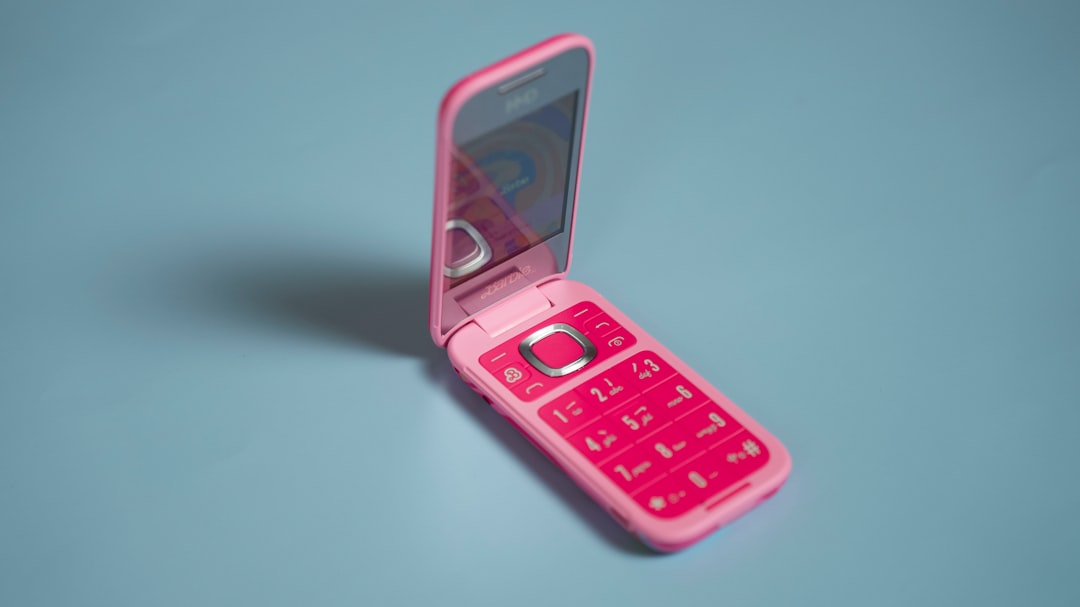
On January 1st of this year, I switched from my iPhone to a flip phone. It's been great. Mostly.
After months of wrestling with my screentime, I decided that a radical change was the only solution. I've downloaded every "dumbphone" app, tried every screentime tracker, and deleted social media apps more times than I can remember.
Nothing worked for me. Somehow, within a week, I would find myself on social media again. Being offline would trigger my FOMO, and I would cave. Then, by the time I satiated my internal desire to know what everyone else is up to, I would rediscover the doomscroll and be sucked back in. Despite my determination to escape social media, willpower alone was unable to change my habits.
I'm sure at least a part of my story sounds familiar. As we've all heard by now, modern technology, and social media especially, is engineered to keep you addicted. Tech companies make money by selling your attention — it's why they load your screen with stimuli and do everything they can to keep you online. 5+ hours of screen time has become the new normal, especially in the era of doomscrolling. Almost any social media app you can think of has implemented the never-ending, algorithm-backed scroll feature: TikTok, Instagram, YouTube, Facebook, Reddit, X, the list goes on.
It's a problem.
In reaction, a resistance movement has grown. People are tired of being controlled by their phones. The movement has grown large enough that Australia, the UK, and other countries have begun to legislate national social media bans for children. The theory is not that all children will immediately stop using social media, but that creating friction in accessibility will decrease the number of kids on social media and, in turn, limit future generations' addiction.
In my experience, beyond physical and mental health issues (which go on forever, go ahead and read about looksmaxxing), phone usage has created a social environment in which everyone's relationship with their smartphone stifles human interaction.
Slightly awkward silent moment? Conversation over. Immediately get on Instagram.
Mid-conversation you get a text? Better check that.
This reflex speaks to a larger issue: humans are no longer forced to be present with one another when face-to-face. We are chained to our phones, always waiting for the next notification.
This isn't news to anyone. We've all felt it. It's why I switched to a flip phone.
Since the switch, I feel more present when I am out in the world. There's nothing to do on my phone, so social interaction is more interesting to my brain than my phone.
It also forces me to engage with the world more. In February, I wrote in my journal, "I am more inclined to talk to strangers lately. I got lost while walking around downtown earlier, and I stopped at a convenience store to ask for directions…I think it's working."
With that said, the flip phone has not been perfect. First of all, there are productive apps that I would love access to but are not on my flip phone. Spotify and Maps have been the ones I miss the most. To replace Spotify, I download music to my flip phone; for Maps, I now have to memorize or write down a route before leaving the house. Early on, I got lost quite a few times.
Even this issue has a silver lining, though. I have become much more conscious of and attached to my music taste. I actually ask people for directions now.
The second gripe I have is that texting sucks. I have gotten a lot faster at it, but it is nowhere near as efficient as the touchscreen. If you don't know what I mean, just look up T9 keyboard. It is slow.
But, again, even this has its upsides. I am much faster to call people now. Often these conversations are much more organic than texting.
Arguably the biggest change has been that my relationship to my MacBook is different. Before switching, my MacBook was a homework or work tool. Since the switch, I find myself on my MacBook nonstop. Checking email, reading articles, and listening to Spotify is fine, but I still watch YouTube and scroll Instagram way more than I would like.
I expected my flip phone to cut out social media completely. Outside of the house, it has. But, as we know, these apps are designed to be addictive. When I come home, I still average about 2.5 hours of YouTube/Instagram browsing on my MacBook per day; I would love for it to be under an hour.
Today, I took the first step and deactivated my Instagram account. Even that gave me a wave of stress: What will my friends say? Will anyone think I blocked them? What if I accidentally delete my entire account?
I would love to do the same for YouTube, but I can't. Once again, determination isn't the issue; my YouTube account is linked to my Gmail account, which is too ingrained in my life to delete. Who would have guessed?
For now, I will rely on self-restraint. We all know how that goes.